Native checkout
Making checkout native, clearer, and easier to complete.

Systems Thinking
Cross-market Scalability
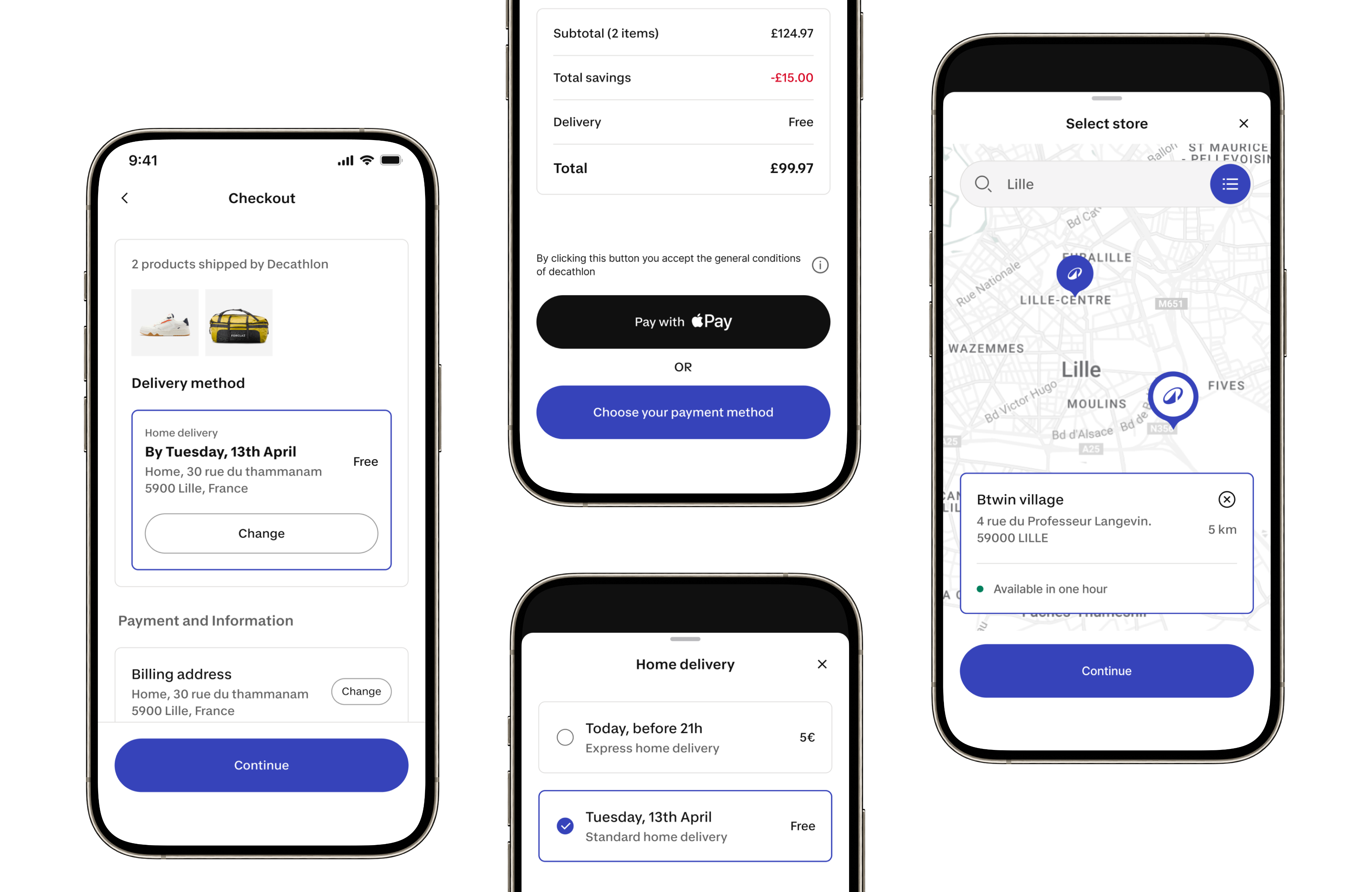
At a glance
Scope
Product design strategy, problem and solution discovery, and end-to-end experience design for a scalable native checkout.

Impact & contribution
Improved checkout conversion by +2.7%, enabled +1.6% buyer-rate uplift through native payments later, and created a scalable checkout foundation.
Decathlon’s shopping app used country-specific WebView checkouts across 38 countries, creating an inconsistent customer experience and making conversion difficult to measure and improve at scale.
I led the product design strategy and end-to-end design of a native checkout foundation that made the journey more consistent, measurable, and adaptable across markets. The work delivered around +2.7% conversion uplift and later unlocked native Apple Pay and Google Pay, adding a further +1.6% buyer-rate uplift.
The checkout problem was bigger than a WebView experience. It was a fragmented product system that created friction for customers and limited the business’s ability to learn, measure, and improve.
Through post-purchase NPS feedback, country input, usability testing, and analytics review, I helped define three core problems:
Customers lacked a seamless checkout experience
The WebView checkout caused issues such as double login, dual cart view, inconsistent interaction patterns, confusing delivery selection, and a journey that felt disconnected from the native app.
Teams lacked reliable visibility into conversion
Because checkout was handled through country-specific mobile web flows, it was difficult to track behavior consistently and identify where customers were dropping off.
The product lacked a scalable foundation
Improvements were difficult to roll out across markets, making it harder to optimize checkout globally.
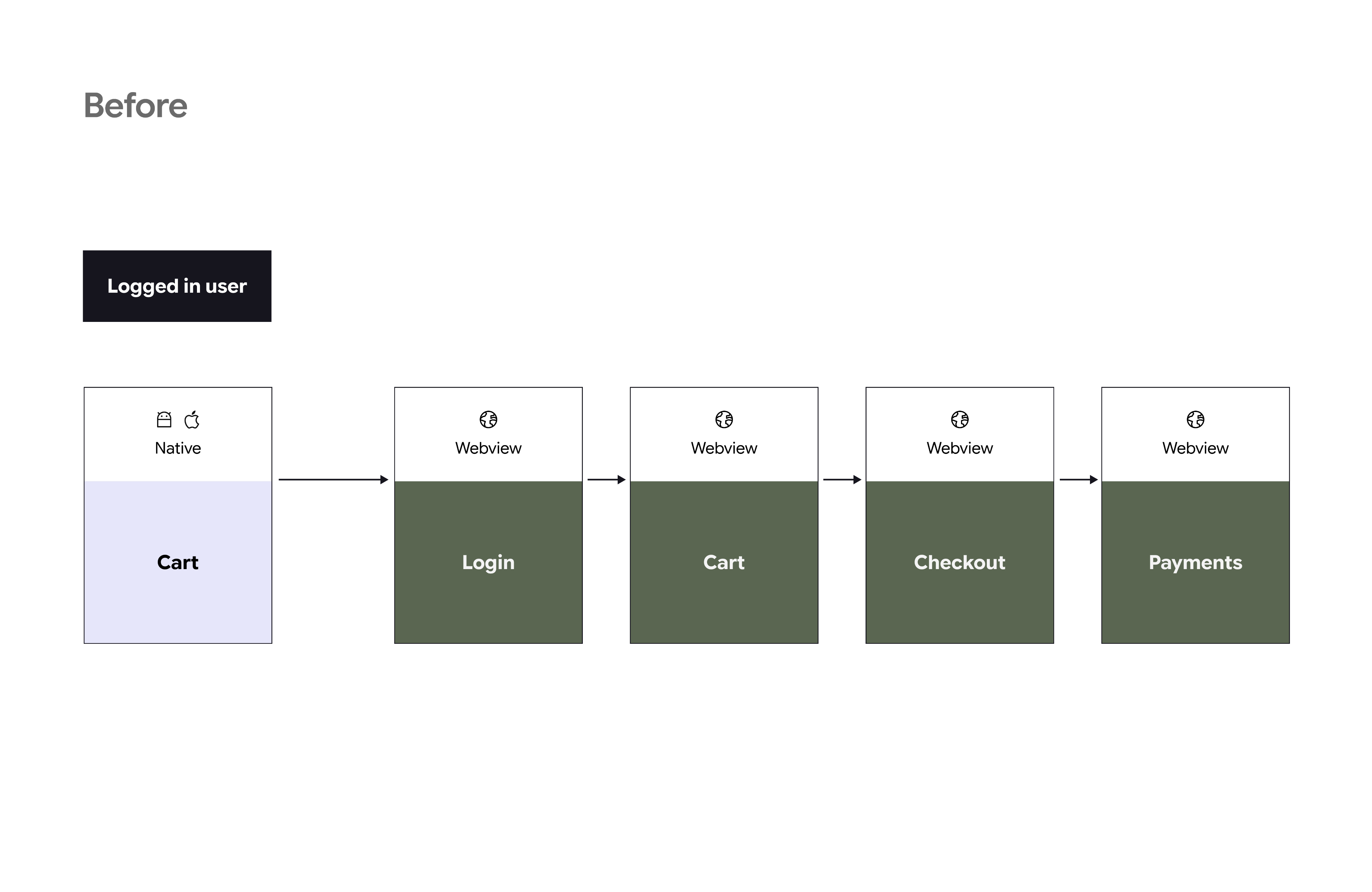
Existing checkout flow showing the shift from native cart to fragmented WebView checkout steps.
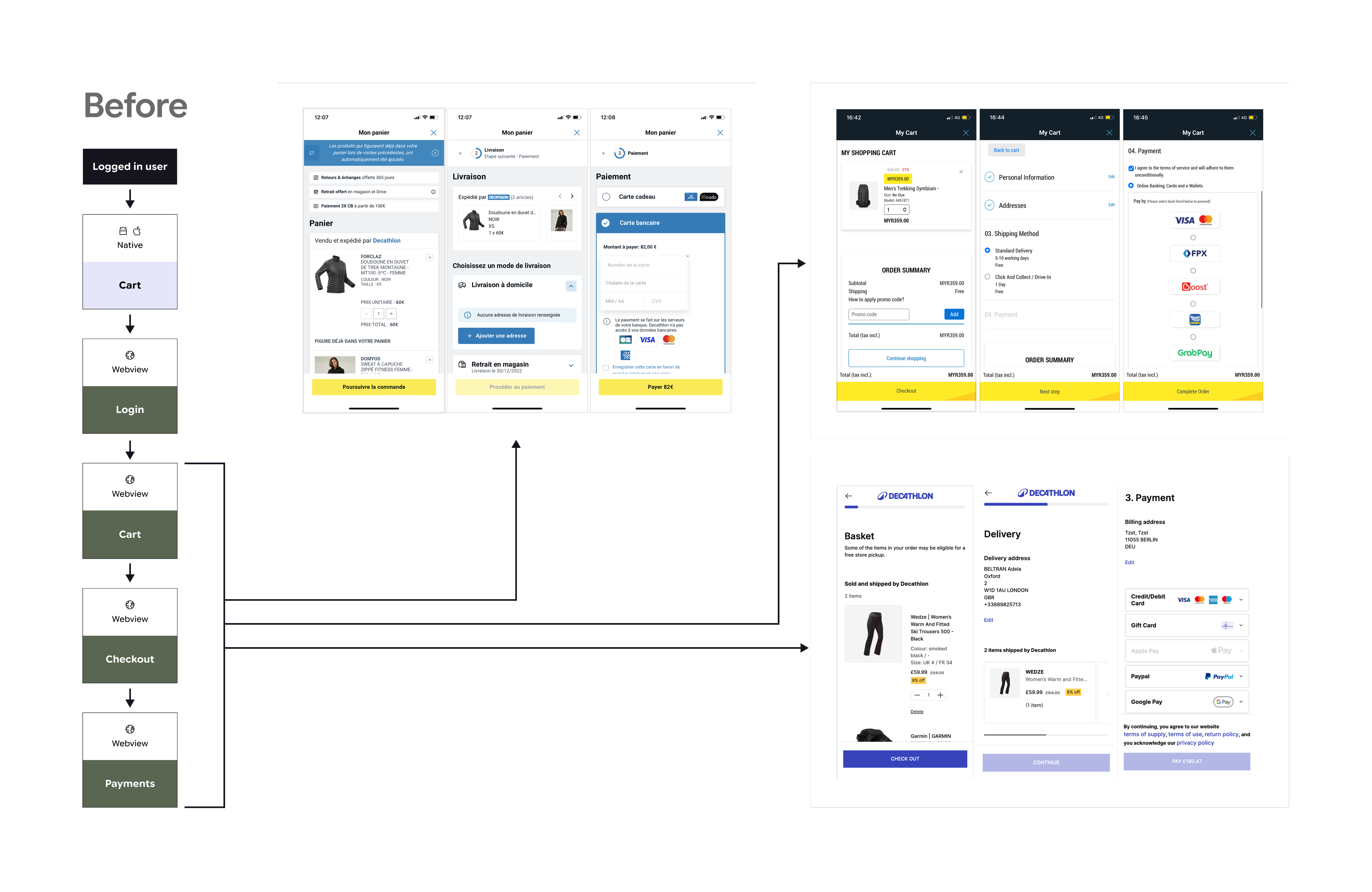
The audit revealed that countries were using different WebView checkout solutions, making the experience inconsistent and harder to measure, compare, and improve at scale.
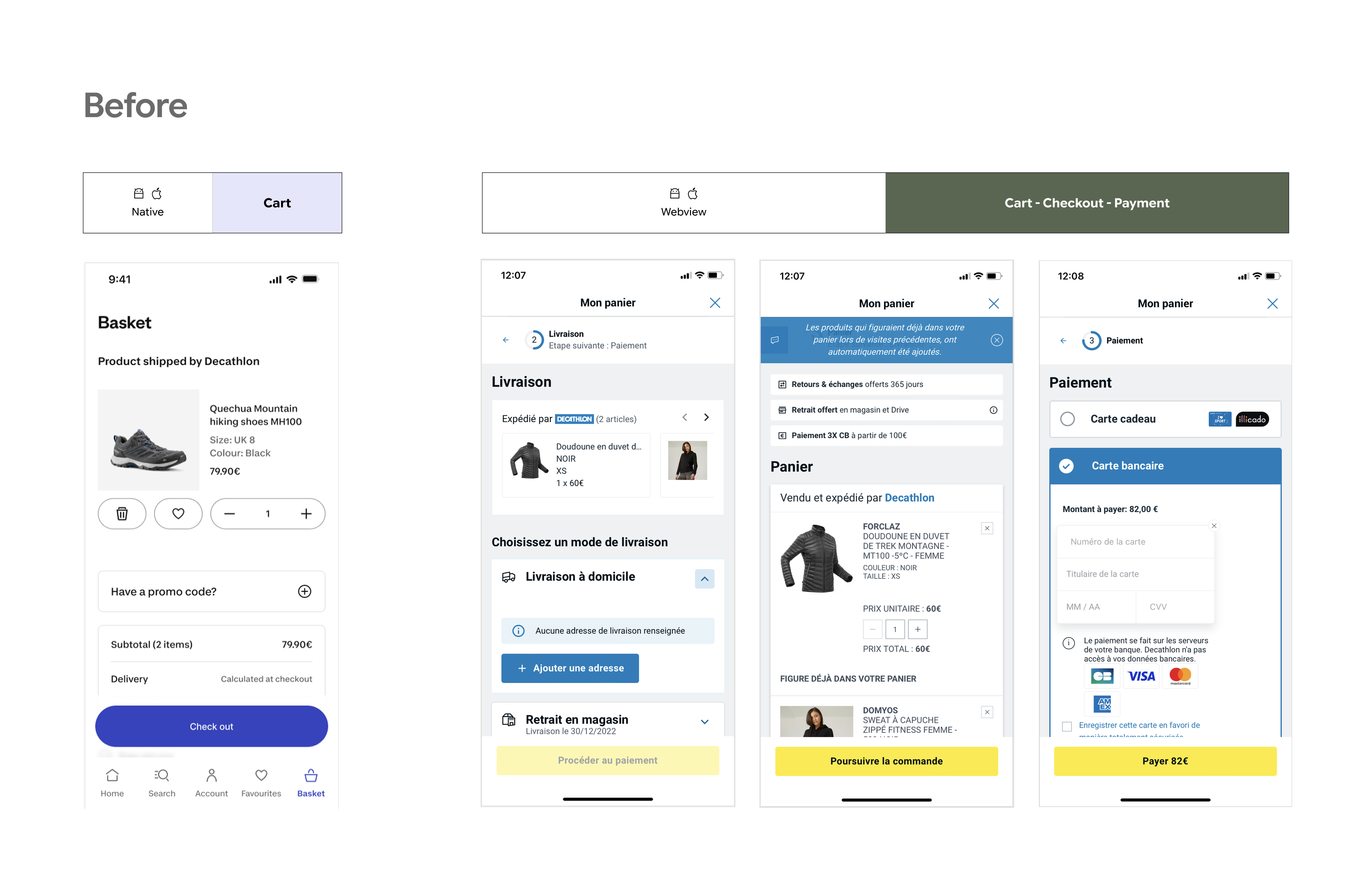
The WebView checkout felt disconnected from the rest of the app, with different visual patterns, interaction models, and levels of clarity across countries.
Aligned the team around evidence
I combined Medallia post-purchase feedback, guerrilla usability testing, country input, and analytics limitations to create a shared understanding of checkout friction.
Turned insights into product opportunities
I translated the findings into opportunity areas and HMW statements, helping the team move from “we need a native checkout” to clearer product questions around clarity, trust, delivery selection, measurement, and scalability.
Shaped a scalable solution direction
I led solution discovery and prototyping to define a modular native checkout model that could provide global consistency while adapting to country-specific needs.
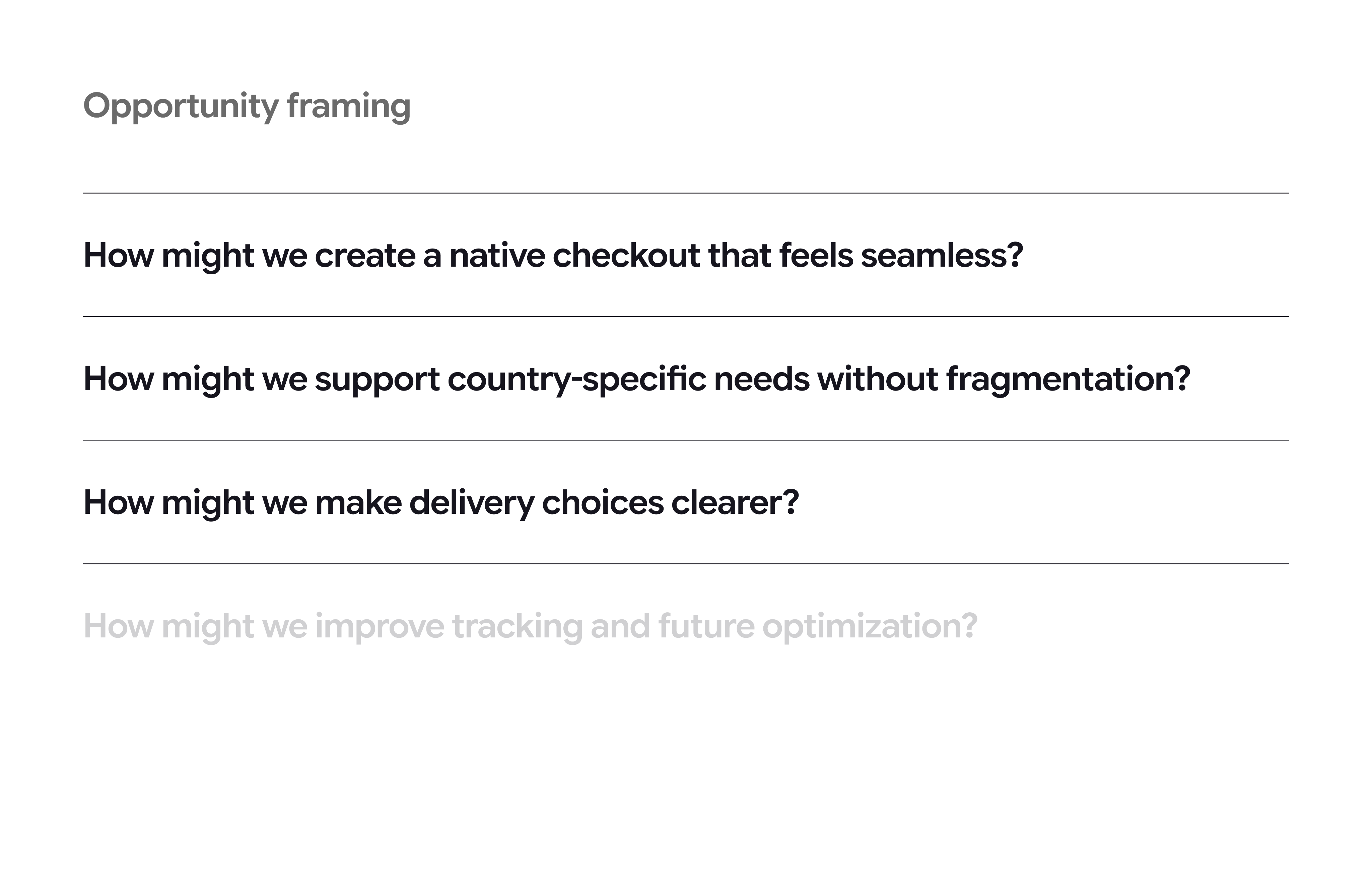
I translated user and business signals into opportunity areas that helped the team move from “replace WebView” to a clearer native checkout strategy.
Reframe checkout as a scalable product foundation
I reframed the work from “replace WebView” to “create a native checkout foundation that improves consistency, measurement, and future optimization.” and this helped the team avoid treating the project as only a UI migration.
Design a modular checkout architecture
I led the design of a modular checkout structure that could support 38 countries while balancing global consistency and local flexibility and this prevented the native checkout from becoming another fragmented country-by-country solution.
Make the checkout guided and clearer
I designed the checkout as a guided experience focused on clarity, especially around delivery choices, split parcels, and customer expectations.
Work within the payment WebView constraint
Because the global payment solution still required WebView, I designed the native checkout to reduce friction before payment and create a smoother handoff.
Final solution
Before and after flow showing the shift from fragmented WebView checkout to a native checkout journey.
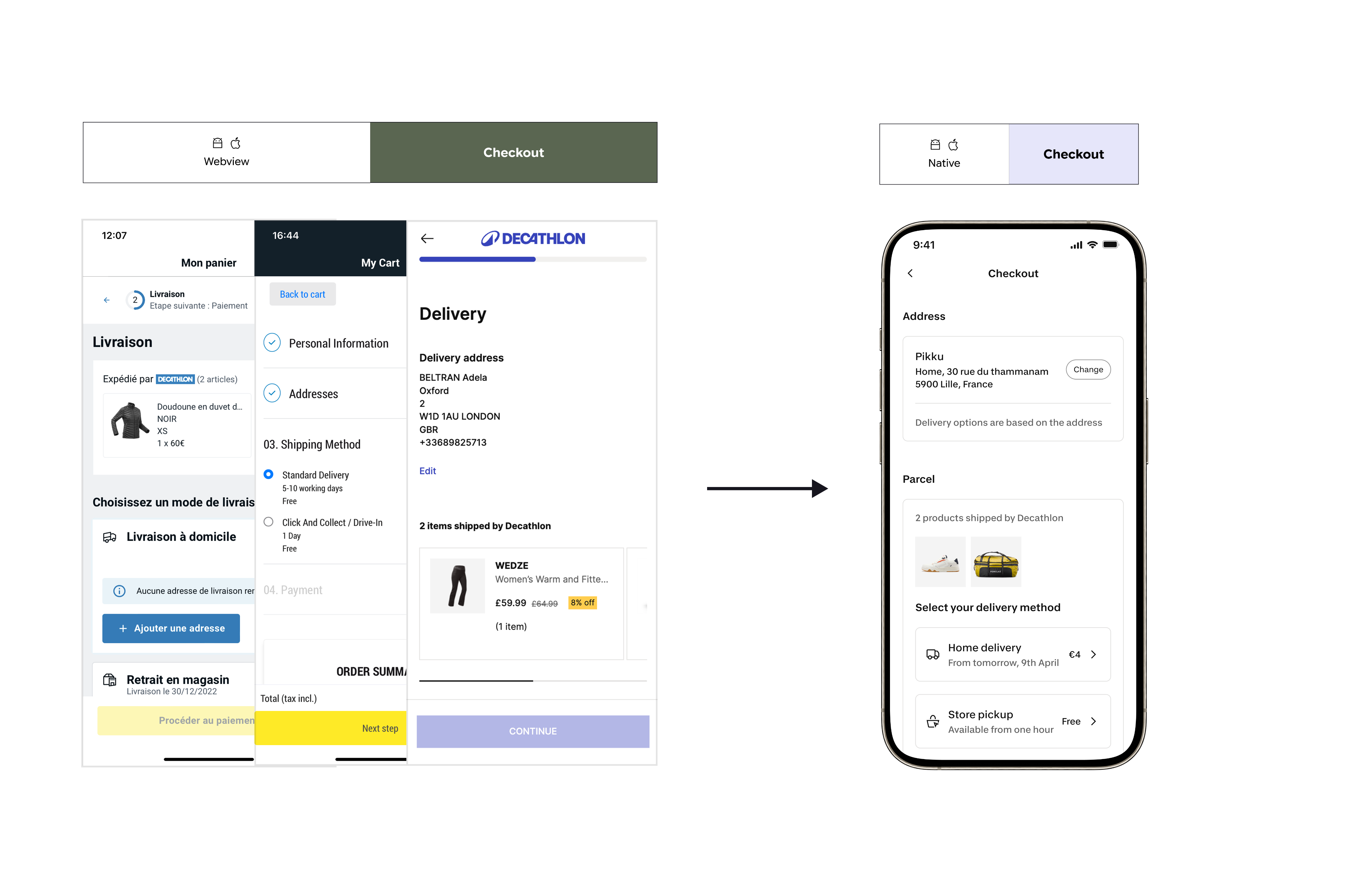
The guided one-page structure reduced cognitive load and helped users understand what to complete next before moving to payment.
Prototype preview showing how the native checkout handles pickup selection with clearer choices, stronger hierarchy, and a more guided decision flow.
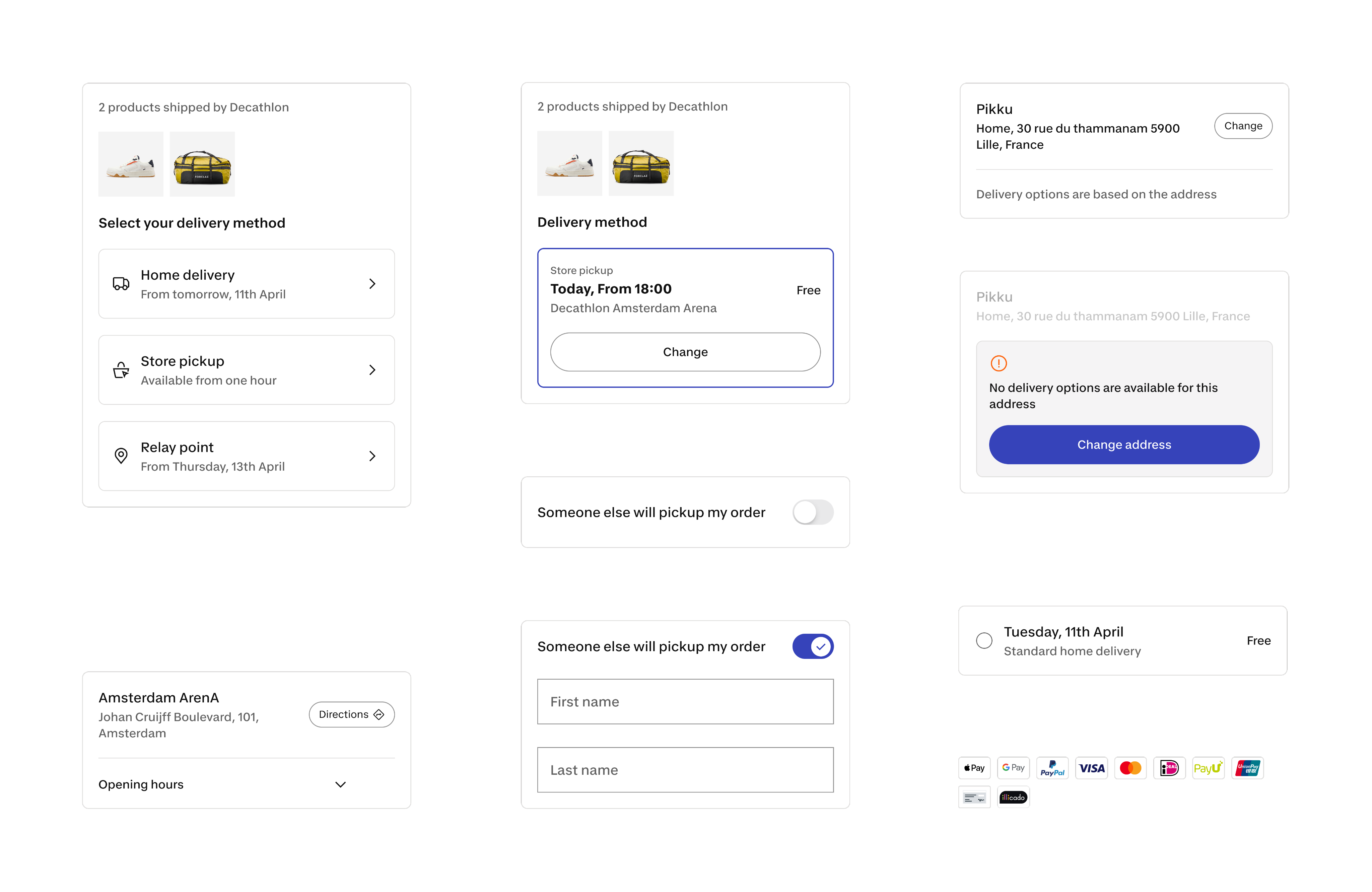
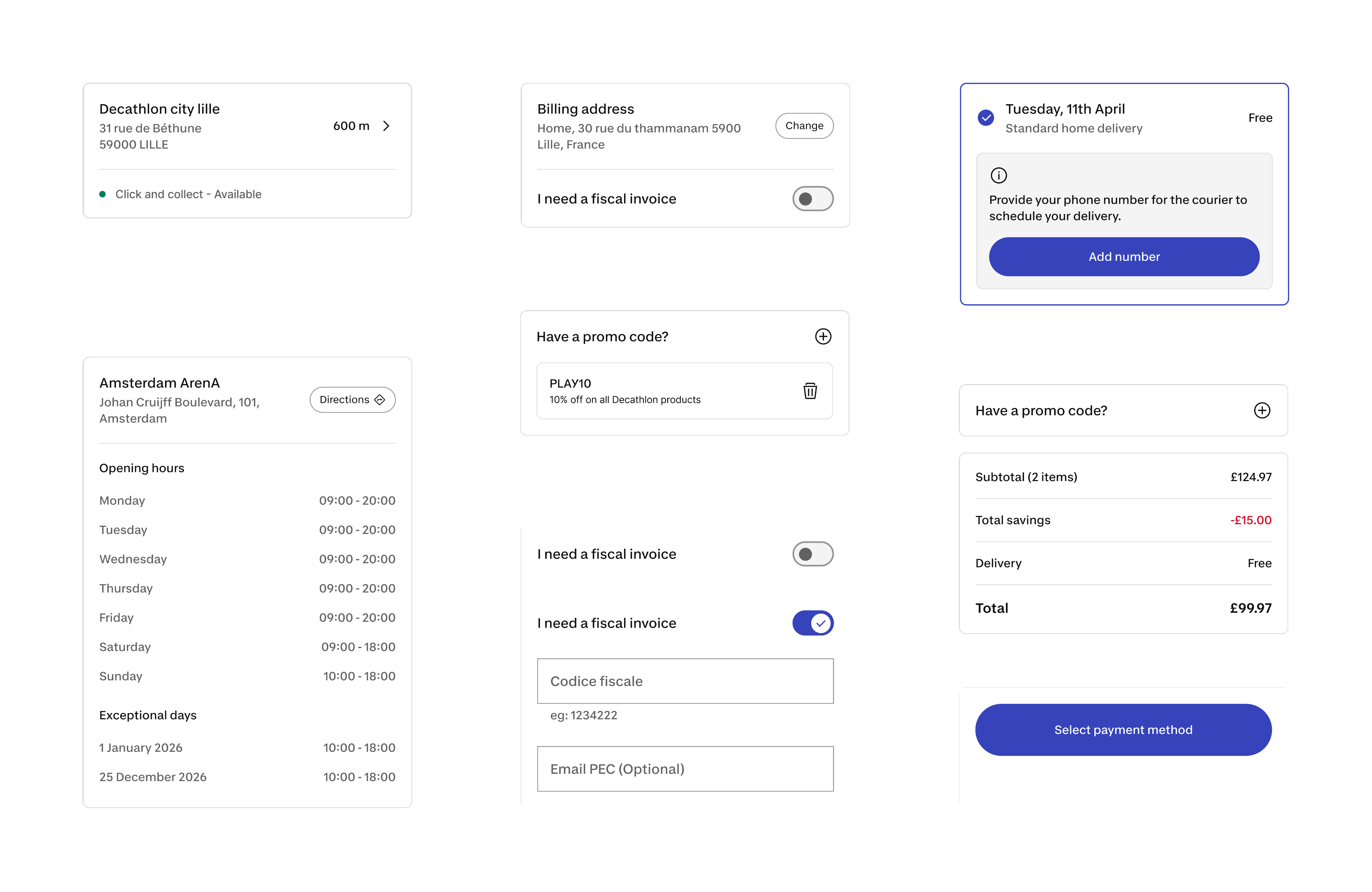
I designed checkout as a modular foundation, balancing global consistency with the flexibility needed for country-specific requirements.
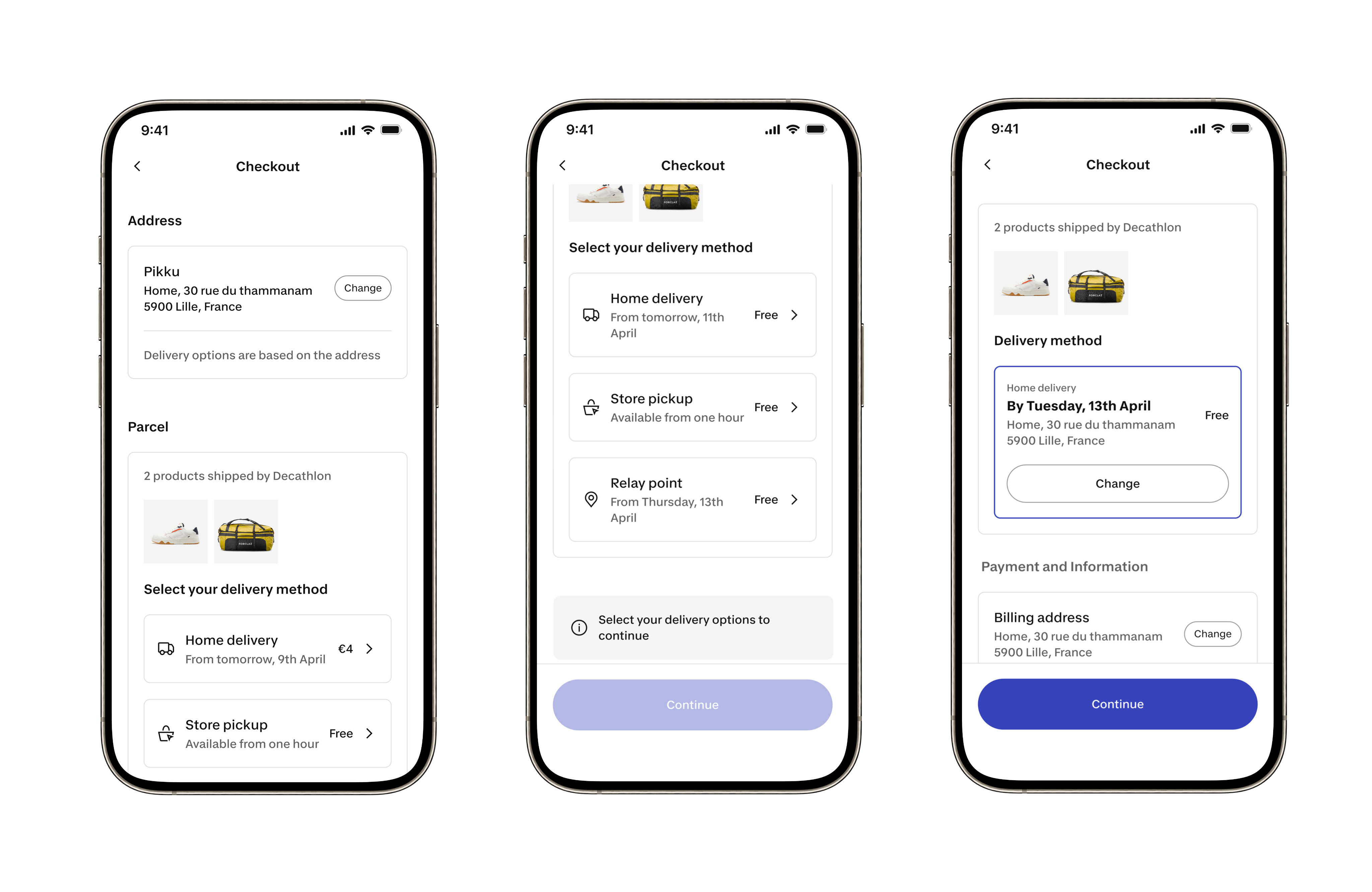
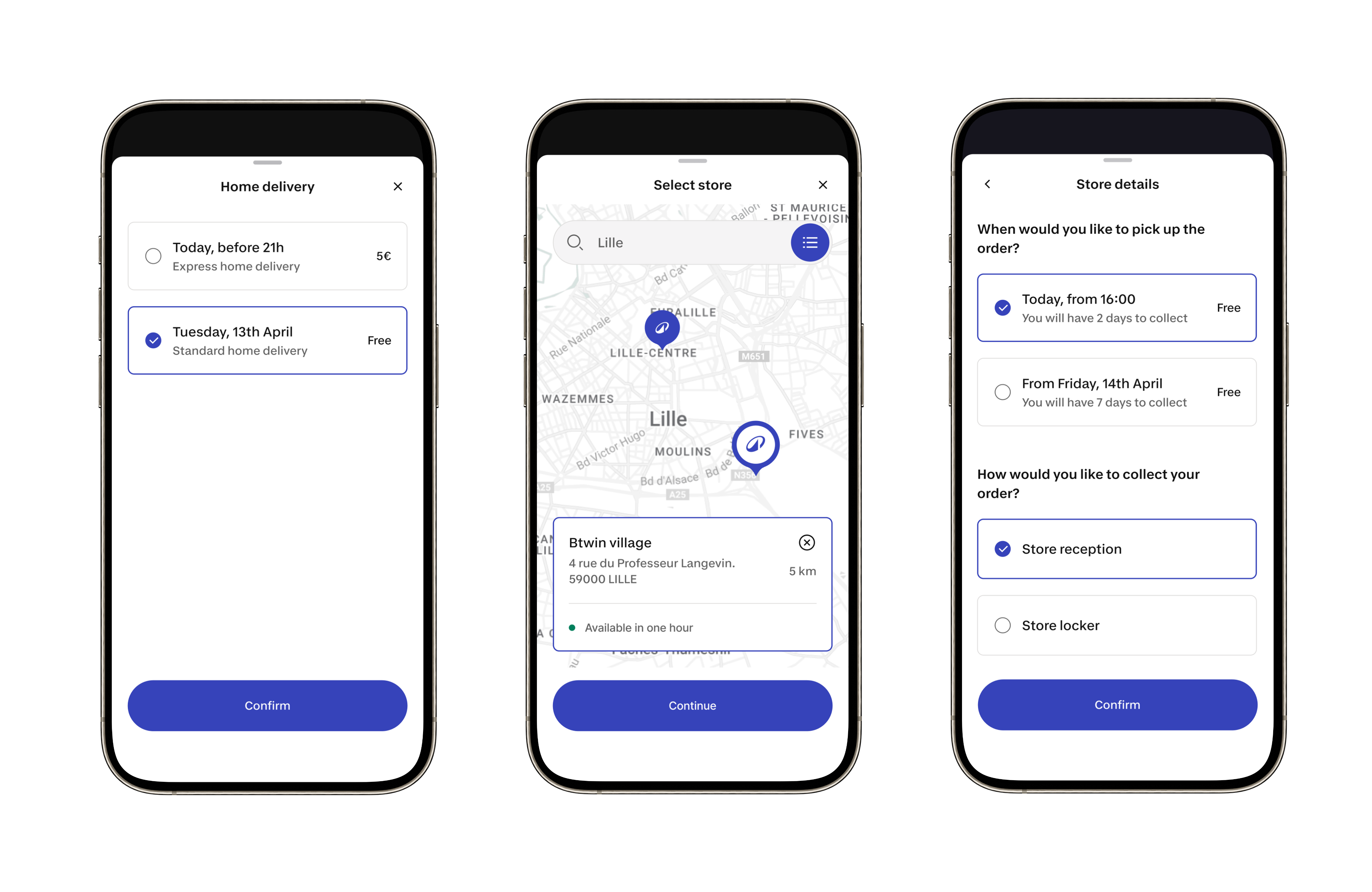
Final checkout screens showing how different delivery scenarios were handled through a consistent native structure.
Impact
Business impact
The native checkout delivered a consistent conversion uplift of around +2.5%
Product impact
The native checkout created a centralized foundation for tracking checkout behavior more accurately, identifying drop-off points, and prioritizing future opportunities.
User impact
Customers experienced a more seamless and consistent checkout journey, with clearer delivery information and a more guided path before payment.
Strategic impact
The work established a checkout North Star: an effortless checkout experience with seamless, flexible payment and transparent delivery options that meet customer expectations with clarity and confidence.
Continuous optimization
Context
After launching native checkout, we were able to act on several high-impact opportunities that were previously difficult to address in the WebView setup. One of the most important was native payment integration through Apple Pay and Google Pay.
Opportunity
Customers wanted a simple and transparent payment experience so they could pay for orders in a way that inspired trust and confidence.
The solution
We introduced native Apple Pay and Google Pay directly in the native cart/checkout experience before the WebView payment step. This gave users a faster, more trusted payment path while still allowing them to continue to the WebView payment page for other payment methods.
The Impact
Both Apple Pay and Google Pay were validated through A/B testing and delivered a +1.6% increase in buyer rate.
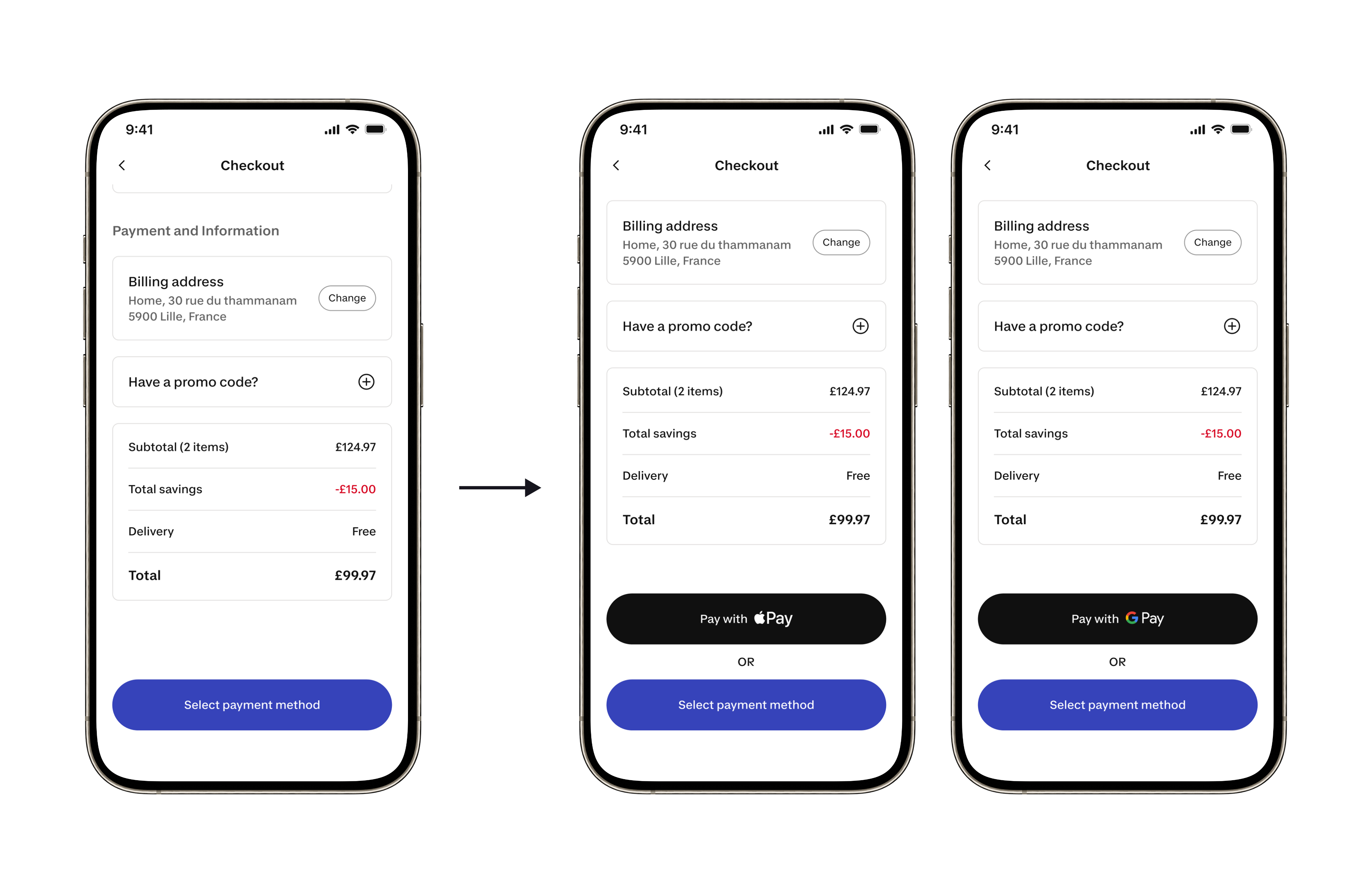
Native payments built on top of the checkout foundation, giving customers a faster and more trusted way to pay before entering the WebView payment flow.
The takeaway
This work turned checkout from a fragmented WebView experience into a native product foundation. It improved conversion, made the journey clearer for customers, and gave teams better visibility to keep optimizing checkout across countries.
Native checkout
Making checkout native, clearer, and easier to complete.

Systems Thinking
Cross-market Scalability
At a glance
Scope
Product design strategy, problem and solution discovery, and end-to-end experience design for a scalable native checkout.

Impact & contribution
Improved checkout conversion by +2.7%, enabled +1.6% buyer-rate uplift through native payments later, and created a scalable checkout foundation.
Decathlon’s shopping app used country-specific WebView checkouts across 38 countries, creating an inconsistent customer experience and making conversion difficult to measure and improve at scale.
I led the product design strategy and end-to-end design of a native checkout foundation that made the journey more consistent, measurable, and adaptable across markets. The work delivered around +2.7% conversion uplift and later unlocked native Apple Pay and Google Pay, adding a further +1.6% buyer-rate uplift.
The checkout problem was bigger than a WebView experience. It was a fragmented product system that created friction for customers and limited the business’s ability to learn, measure, and improve.
Through post-purchase NPS feedback, country input, usability testing, and analytics review, I helped define three core problems:
Customers lacked a seamless checkout experience
The WebView checkout caused issues such as double login, dual cart view, inconsistent interaction patterns, confusing delivery selection, and a journey that felt disconnected from the native app.
Teams lacked reliable visibility into conversion
Because checkout was handled through country-specific mobile web flows, it was difficult to track behavior consistently and identify where customers were dropping off.
The product lacked a scalable foundation
Improvements were difficult to roll out across markets, making it harder to optimize checkout globally.
Existing checkout flow showing the shift from native cart to fragmented WebView checkout steps.
The audit revealed that countries were using different WebView checkout solutions, making the experience inconsistent and harder to measure, compare, and improve at scale.
The WebView checkout felt disconnected from the rest of the app, with different visual patterns, interaction models, and levels of clarity across countries.
Aligned the team around evidence
I combined Medallia post-purchase feedback, guerrilla usability testing, country input, and analytics limitations to create a shared understanding of checkout friction.
Turned insights into product opportunities
I translated the findings into opportunity areas and HMW statements, helping the team move from “we need a native checkout” to clearer product questions around clarity, trust, delivery selection, measurement, and scalability.
Shaped a scalable solution direction
I led solution discovery and prototyping to define a modular native checkout model that could provide global consistency while adapting to country-specific needs.
I translated user and business signals into opportunity areas that helped the team move from “replace WebView” to a clearer native checkout strategy.
Reframe checkout as a scalable product foundation
I reframed the work from “replace WebView” to “create a native checkout foundation that improves consistency, measurement, and future optimization.” and this helped the team avoid treating the project as only a UI migration.
Design a modular checkout architecture
I led the design of a modular checkout structure that could support 38 countries while balancing global consistency and local flexibility and this prevented the native checkout from becoming another fragmented country-by-country solution.
Make the checkout guided and clearer
I designed the checkout as a guided experience focused on clarity, especially around delivery choices, split parcels, and customer expectations.
Work within the payment WebView constraint
Because the global payment solution still required WebView, I designed the native checkout to reduce friction before payment and create a smoother handoff.
Final solution
Before and after flow showing the shift from fragmented WebView checkout to a native checkout journey.
The guided one-page structure reduced cognitive load and helped users understand what to complete next before moving to payment.
Prototype preview showing how the native checkout handles pickup selection with clearer choices, stronger hierarchy, and a more guided decision flow.
I designed checkout as a modular foundation, balancing global consistency with the flexibility needed for country-specific requirements.
Final checkout screens showing how different delivery scenarios were handled through a consistent native structure.
Impact
Business impact
The native checkout delivered a consistent conversion uplift of around +2.5%
Product impact
The native checkout created a centralized foundation for tracking checkout behavior more accurately, identifying drop-off points, and prioritizing future opportunities.
User impact
Customers experienced a more seamless and consistent checkout journey, with clearer delivery information and a more guided path before payment.
Strategic impact
The work established a checkout North Star: an effortless checkout experience with seamless, flexible payment and transparent delivery options that meet customer expectations with clarity and confidence.
Continuous optimization
Context
After launching native checkout, we were able to act on several high-impact opportunities that were previously difficult to address in the WebView setup. One of the most important was native payment integration through Apple Pay and Google Pay.
Opportunity
Customers wanted a simple and transparent payment experience so they could pay for orders in a way that inspired trust and confidence.
The solution
We introduced native Apple Pay and Google Pay directly in the native cart/checkout experience before the WebView payment step. This gave users a faster, more trusted payment path while still allowing them to continue to the WebView payment page for other payment methods.
The Impact
Both Apple Pay and Google Pay were validated through A/B testing and delivered a +1.6% increase in buyer rate.
Native payments built on top of the checkout foundation, giving customers a faster and more trusted way to pay before entering the WebView payment flow.
The takeaway
This work turned checkout from a fragmented WebView experience into a native product foundation. It improved conversion, made the journey clearer for customers, and gave teams better visibility to keep optimizing checkout across countries.
Native checkout
Making checkout native, clearer, and easier to complete.

Systems Thinking
Cross-market Scalability
At a glance
Scope
Product design strategy, problem and solution discovery, and end-to-end experience design for a scalable native checkout.

Impact & contribution
Improved checkout conversion by +2.7%, enabled +1.6% buyer-rate uplift through native payments later, and created a scalable checkout foundation.
Summary
Decathlon’s shopping app used country-specific WebView checkouts across 38 countries, creating an inconsistent customer experience and making conversion difficult to measure and improve at scale.
I led the product design strategy and end-to-end design of a native checkout foundation that made the journey more consistent, measurable, and adaptable across markets. The work delivered around +2.7% conversion uplift and later unlocked native Apple Pay and Google Pay, adding a further +1.6% buyer-rate uplift.
Problem space
The checkout problem was bigger than a WebView experience. It was a fragmented product system that created friction for customers and limited the business’s ability to learn, measure, and improve.
Through post-purchase NPS feedback, country input, usability testing, and analytics review, I helped define three core problems:
Customers lacked a seamless checkout experience
The WebView checkout caused issues such as double login, dual cart view, inconsistent interaction patterns, confusing delivery selection, and a journey that felt disconnected from the native app.
Teams lacked reliable visibility into conversion
Because checkout was handled through country-specific mobile web flows, it was difficult to track behavior consistently and identify where customers were dropping off.
The product lacked a scalable foundation
Improvements were difficult to roll out across markets, making it harder to optimize checkout globally.
Existing checkout flow showing the shift from native cart to fragmented WebView checkout steps.
The audit revealed that countries were using different WebView checkout solutions, making the experience inconsistent and harder to measure, compare, and improve at scale.
The WebView checkout felt disconnected from the rest of the app, with different visual patterns, interaction models, and levels of clarity across countries.
My approach
Aligned the team around evidence
I combined Medallia post-purchase feedback, guerrilla usability testing, country input, and analytics limitations to create a shared understanding of checkout friction.
Turned insights into product opportunities
I translated the findings into opportunity areas and HMW statements, helping the team move from “we need a native checkout” to clearer product questions around clarity, trust, delivery selection, measurement, and scalability.
Shaped a scalable solution direction
I led solution discovery and prototyping to define a modular native checkout model that could provide global consistency while adapting to country-specific needs.
I translated user and business signals into opportunity areas that helped the team move from “replace WebView” to a clearer native checkout strategy.
Key decisions I made
Reframe checkout as a scalable product foundation
I reframed the work from “replace WebView” to “create a native checkout foundation that improves consistency, measurement, and future optimization.” and this helped the team avoid treating the project as only a UI migration.
Design a modular checkout architecture
I led the design of a modular checkout structure that could support 38 countries while balancing global consistency and local flexibility and this prevented the native checkout from becoming another fragmented country-by-country solution.
Make the checkout guided and clearer
I designed the checkout as a guided experience focused on clarity, especially around delivery choices, split parcels, and customer expectations.
Work within the payment WebView constraint
Because the global payment solution still required WebView, I designed the native checkout to reduce friction before payment and create a smoother handoff.
Final solution
Before and after flow showing the shift from fragmented WebView checkout to a native checkout journey.
The guided one-page structure reduced cognitive load and helped users understand what to complete next before moving to payment.
Prototype preview showing how the native checkout handles pickup selection with clearer choices, stronger hierarchy, and a more guided decision flow.
I designed checkout as a modular foundation, balancing global consistency with the flexibility needed for country-specific requirements.
Final checkout screens showing how different delivery scenarios were handled through a consistent native structure.
Impact
Business impact
The native checkout delivered a consistent conversion uplift of around +2.7%
Product impact
The native checkout created a centralized foundation for tracking checkout behavior more accurately, identifying drop-off points, and prioritizing future opportunities.
User impact
Customers experienced a more seamless and consistent checkout journey, with clearer delivery information and a more guided path before payment.
Strategic impact
The work established a checkout North Star: an effortless checkout experience with seamless, flexible payment and transparent delivery options that meet customer expectations with clarity and confidence.
Continuous optimization
Native Payments
Context
After launching native checkout, we were able to act on several high-impact opportunities that were previously difficult to address in the WebView setup. One of the most important was native payment integration through Apple Pay and Google Pay.
Opportunity
Customers wanted a simple and transparent payment experience so they could pay for orders in a way that inspired trust and confidence.
The solution
We introduced native Apple Pay and Google Pay directly in the native cart/checkout experience before the WebView payment step. This gave users a faster, more trusted payment path while still allowing them to continue to the WebView payment page for other payment methods.
The Impact
Both Apple Pay and Google Pay were validated through A/B testing and delivered a +1.6% increase in buyer rate.
Native payments built on top of the checkout foundation, giving customers a faster and more trusted way to pay before entering the WebView payment flow.
The takeaway
This work turned checkout from a fragmented WebView experience into a native product foundation. It improved conversion, made the journey clearer for customers, and gave teams better visibility to keep optimizing checkout across countries.
